
The world of enterprise software is undergoing a relentless evolution, and many companies face the challenge of keeping pace to remain competitive. Enterprise resource planning (ERP) systems are key to efficient business operations, and in a constantly changing digital landscape, ERP trends are crucial.
Here, we take an in-depth look at the exciting and transformative trends that are taking the world of ERP systems by storm in 2022 and 2023. From artificial intelligence to the cloud, from mobile applications to sustainability – we will explore the key developments shaping the future of the ERP universe and helping companies increase efficiency, reduce costs, and secure their competitive edge. Join us as we delve into the world of ERP trends for 2023 and discover how these technologies are revolutionizing the way businesses operate.
Rapid response in times of crisis: The value of agile ERP systems
Times of crisis are a true test for companies. The ability to react and adapt quickly to unforeseen challenges is crucial. In this context, an agile ERP system proves to be a key ERP trend, enabling companies to respond flexibly and proactively to crises.
An agile ERP system, on the other hand, is designed to offer the flexibility that is essential in times of crisis. It enables companies to quickly adapt their processes to respond to changing conditions. This can include, for example, replanning production capacities, switching to online sales channels, or adjusting inventory management strategies.
One of the key components of agile ERP systems is real-time data processing. With up-to-date information on the market situation and operational processes, companies can make faster and more informed decisions. This is particularly important for adjusting demand, using resources efficiently, and avoiding supply chain bottlenecks.
Furthermore, cloud-based ERP solutions are also part of these agile systems, as they enable access from anywhere and at any time. This proved extremely valuable during the COVID-19 pandemic, as it allowed companies to work remotely and maintain business operations.
To benefit from this trend, companies should ensure they use a modern, agile ERP solution capable of adapting to unforeseen circumstances. It is advisable to regularly review and update business processes to be prepared for current challenges. The ability to react quickly in times of crisis is increasingly becoming a competitive advantage that can mean the difference between success and stagnation.
Cloud ERP: The future of enterprise software
One of the most groundbreaking developments in enterprise resource planning is undoubtedly the increasing shift towards the cloud. In an era where flexibility and scalability are crucial for businesses, cloud ERP is proving to be a transformative force, outperforming traditional, on-premises ERP systems.

Cloud ERP systems allow companies to move their entire business infrastructure to the cloud, offering numerous advantages. The first and most obvious is flexibility. With cloud ERP, companies are no longer tied to physical servers and expensive maintenance contracts. Instead, they can obtain their ERP software as a service (Software as a Service, SaaS), meaning they can access their data and applications from anywhere, at any time. This is invaluable, especially in an era of decentralized work and global trade.
Another advantage of cloud ERP is its scalability. Companies can increase or decrease their resources as needed without having to worry about purchasing additional hardware or building new data centers. This is particularly important for growing companies that need to respond quickly to changing requirements.
Security is a frequently discussed topic in relation to cloud ERP. However, modern cloud ERP providers invest significantly in best-in-class security measures to protect their customers’ data. Most companies can benefit from the sophisticated security infrastructure of the major cloud providers.
Finally, we mustn’t overlook cost efficiency. Cloud ERP eliminates the high initial investments in hardware and software licenses. Instead, companies pay a regular subscription fee, resulting in predictable and plannable costs.
Mobile ERP solutions: Business on the Go
Mobile ERP solutions are one of the most exciting trends in the world of enterprise software, helping to optimize business processes and increase efficiency. These systems enable employees to access company data and applications from virtually anywhere and via a variety of devices. Whether from a laptop, tablet, or smartphone, this technology offers the freedom and flexibility employees need to be productive even outside the office.
This technology has a tremendous impact on various aspects of the business world. For example, sales representatives can conduct customer visits and instantly access up-to-date order data and inventory levels. Production managers can monitor machines and track production data in real time, even when they are not physically present at the factory. Even HR departments can access critical personnel information while on the go. However, mobile ERP solutions offer more than just convenience and mobility.
Security also plays a crucial role in mobile ERP solutions. Since company data is accessible from mobile devices, protection against data loss and unauthorized access is of paramount importance. Modern ERP solutions therefore offer advanced security mechanisms, including encryption and access restrictions.
AI and IoT: The future of data analysis in ERP systems
The convergence of artificial intelligence (AI) and the Internet of Things (IoT) is a remarkable trend revolutionizing the world of ERP systems. This dynamic duo promises not only a profound transformation of business processes but also paves the way for smarter, data-driven management.

The Internet of Things (IoT) connects physical devices and sensors to collect real-time data on various aspects of business operations. This data is fed into ERP software, enabling more comprehensive and precise monitoring and control of processes. For example, manufacturers can monitor machines in real time to identify performance issues before they lead to downtime.
Artificial intelligence takes this data and transforms it into valuable insights. Using machine learning and advanced algorithms, AI can recognize patterns in IoT data, make predictions, and identify automation opportunities. This enables forecasting and optimization of supply chains, production processes, and maintenance work, to name just a few examples.
Another area where AI and IoT are revolutionizing ERP is customer loyalty. Companies can analyze customer behavior and preferences using IoT sensors and create personalized offers based on this data. This leads to stronger customer loyalty and ultimately higher revenue.
While the integration of AI and IoT into ERP systems undoubtedly offers a wealth of benefits, it also requires increased attention to data protection and security. Since these technologies process large amounts of data, it is crucial to ensure that sensitive information is protected and complies with data protection regulations.
Hyperautomation: The Future of the ERP System
Hyperautomation allows companies not only to automate repetitive tasks but also to simplify complex, rule-based processes. For example, order processing, invoicing, and inventory management can be almost completely automated. This leads to a drastic reduction in human error and a significant increase in efficiency.
The use of AI and machine learning enables ERP systems to learn from collected data and predict future decisions. This is invaluable, especially in demand planning and inventory management, as it allows companies to optimize their stock levels and improve cash flow.
RPA goes a step further by replacing manual, rule-based tasks with automated bots. These bots can be deployed across various business areas, such as customer service, accounting, and human resources. This allows employees to focus on more complex and value-added tasks while the bots handle routine duties.
Hyperautomation also impacts the customer experience. AI-powered chatbots and virtual assistants enable companies to provide 24/7 support and information. This improves customer satisfaction and increases efficiency in customer service.
The success of hyperautomation depends on careful planning and integration with existing ERP software. It is crucial to identify the right processes and ensure that the automation aligns with business goals and requirements.
Securing supply chains: ERP trends in a globalized world
Ensuring stable supply chains has become significantly more important in recent years, and this trend continues in the world of ERP systems. Companies are increasingly reliant on complex international supply chains, making the ability to efficiently manage and secure these supply chains crucial.
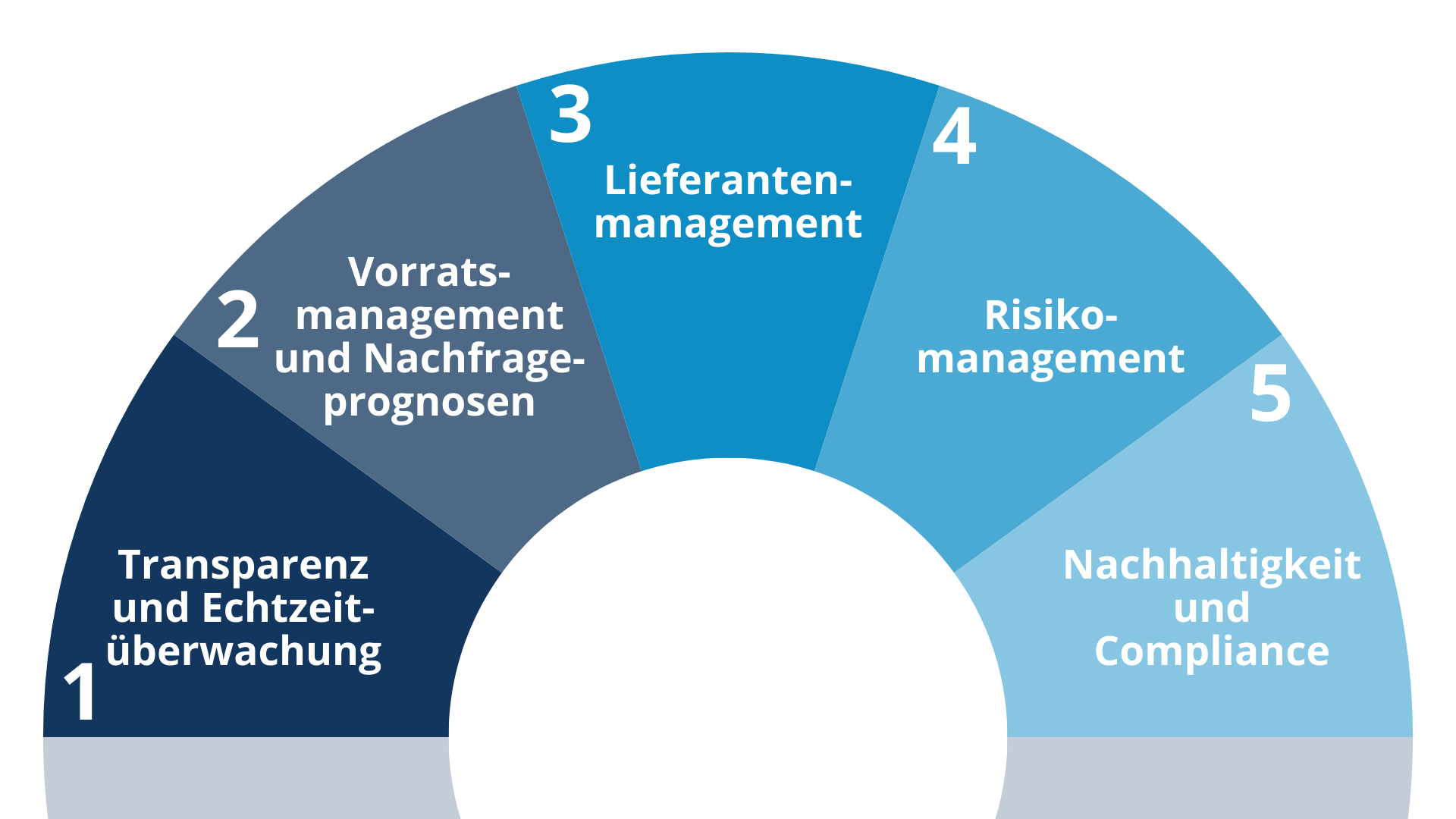
Modern ERP systems increasingly rely on comprehensive supply chain management functions. These integrated solutions enable companies to monitor and optimize their entire supply chains, from procurement to delivery. Here are some of the key trends regarding supply chain security:
Transparency and real-time monitoring
One of the key aspects of ensuring a secure supply chain is real-time monitoring. Many companies are increasingly relying on IoT sensors and GPS tracking to monitor the location and condition of goods along the supply chain. This data is seamlessly integrated into the ERP system, so companies are always informed about the status of their deliveries.
Inventory management and demand forecasting
As mentioned previously, a modern ERP system uses advanced analytics and AI technologies to predict demand more accurately. This enables better inventory planning to avoid shortages and simultaneously optimize storage costs.
Supplier management
A stable supply chain also requires effective supplier management. ERP software provides tools for evaluating and monitoring supplier performance. This helps companies select the best suppliers and identify bottlenecks early on.
Risk management
The increasing complexity of global supply chains also poses risks. Modern ERP systems integrate risk management tools to help companies identify and manage risks, whether from natural disasters, political instability, or other factors.
Sustainability and compliance
Another important trend is the consideration of sustainability aspects in the supply chain. Companies are using ERP systems to ensure compliance with environmental regulations and ethical standards, which makes sense not only ethically but also economically.
Conclusion: The future of enterprise software
There is no standstill in the world of enterprise software. In the age of digitalization, globalization, and constantly changing market conditions, ERP systems are crucial for gaining a competitive edge and meeting the demands of the modern business world.
The ERP trends presented, from cloud ERP and mobile ERP solutions to hyperautomation and supply chain management, illustrate that ERP systems are far more than just tools for managing company resources. They are drivers of innovation that enable companies to be more agile, efficient, and competitive.
Cloud ERP offers flexibility and scalability, mobile solutions enable work from anywhere, hyperautomation increases efficiency and agility, and ensuring supply chains provides stability and transparency in global markets. These ERP trends are not isolated aspects, but are often intertwined and form a comprehensive vision for the future of enterprise software.
Companies that proactively integrate these trends into their business strategy will be able to optimize their operations, reduce costs, increase customer satisfaction, and ultimately achieve success. It is important to emphasize that implementing these ERP trends is not an option, but a necessity to survive and thrive in a world of constant change.