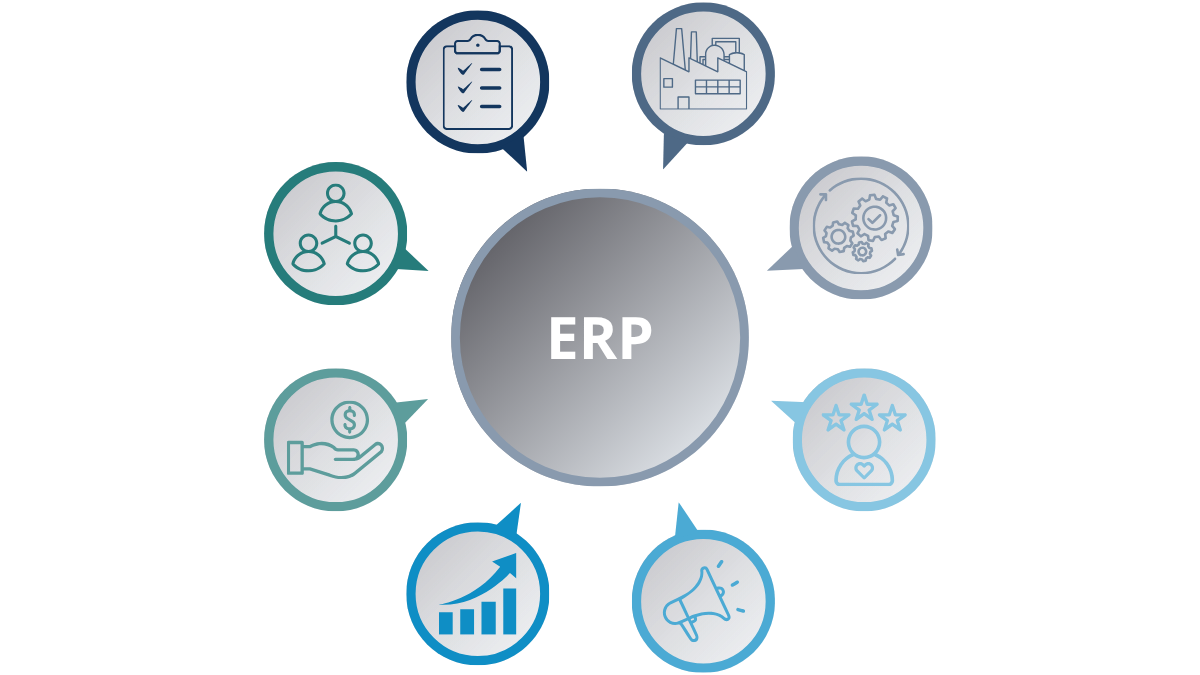
An overview of the most important ERP functions
production
ERP software can provide various functions for production planning and control of production processes.
Production planning and control (PPS) remains a central core component of every industrial company. PPS modules enable, among other things, efficient just-in-time production.
Inventory management and materials management
In German-speaking countries, the terms “goods management” and “materials management” are often used synonymously. Although both terms literally describe the same process, a distinction must strictly be made between them.
While inventory management focuses primarily on the area of trade, materials management focuses primarily on the manufacturing company.
Modern ERP software still includes various functions related to both areas. These include, among others:
- Master data management
- Bills of materials
- Product management
In principle, all processes of material and inventory management can now be carried out using ERP software modules.
Document Management System / DMS
Among other things, modern ERP systems also make it possible to use so-called document management systems.
This function enables all internal document management processes to be digitally controlled and managed via software. Additional features, such as full-text search, significantly simplify internal company processes, thus saving time.
Customer Relationship Management/CRM
Customer Relationship Management, also known as CRM, is understood in German-speaking countries as customer care or customer relationship management.
Customer Relationship Management can be primarily divided into two sub-functions:
Firstly, Customer Relationship Management helps to place a targeted focus on the customer base.
On the other hand, it also involves the strategic design of all customer relationship processes among themselves.
Marketing
CRM software allows companies to control various campaign management processes, meaning that ERP software systems can also be used in the field of marketing.
Modern functions within the ERP system can also be used to measure the success of a particular campaign. Through appropriate analysis functions, you can gain valuable insights into your customers’ interests.
Function in the sales area

Automated contact histories give sales staff an overview at any time of the nature and timing of the last interaction with specific customers.
The integrated document management system also allows users to access and easily modify current contracts and relevant information at any time, if necessary.
Furthermore, integrated lead management within the ERP software allows sales representatives to identify promising leads using appropriate analysis functions and to contact them in a targeted manner.
Project management
A large majority of companies today operate on a project basis. To meet the high demands, many businesses now use integrated project management software. Depending on the type of business, different ERP software solutions may be used:
- Project collaboration systems
- Enterprise Project Management Systems
- Multi Project Management Systems
- Single project management systems
The functions relating to project management also extend to sub-areas of process orientation, planning orientation, resource orientation, and service orientation.
All these sub-functions can be administered according to the company’s needs via customizing.
Operational function of procurement
The procurement function of the ERP software system focuses primarily on ensuring the company has a needs-based and economical supply of goods.
This process can be automated using ERP functions, allowing your company to save valuable time and personnel resources in the long term.
Functions in human resources
Regardless of the type of company, human resources is an area of great importance in all business sectors.
The central task of the personnel department, also called Human Resource Management, lies in the care and coordination of personnel.
Modern ERP software systems can be used in a variety of ways in human resources management. Thanks to digital timetables, HR professionals have an overview of all employee schedules and deployment plans and can make necessary changes. Employees are automatically notified of any changes via the ERP system.
Finance and Accounting
The finance and accounting department occupies an important position in every company for the business success of the business.
Therefore, various functions in the ERP system can also be used to simplify and make more effective certain processes and procedures in this area.
A fundamental distinction must first be made between internal and external financial accounting. Internal accounting is often equated with the term controlling.
At the internal level, key performance indicators are determined, which often serve as a central point for strategic decisions within the company.
On an external level, the focus is increasingly shifting to financial accounting – here, the company’s balance sheets are primarily prepared and presented to the outside world.
Most companies rely on separate tools for external and internal accounting and finance. However, using a comprehensive ERP software system avoids gaps between these areas, making the overall process more efficient and flexible.
Data protection
With regard to data protection, modern ERP systems rely on various functions to ensure the security and confidentiality of sensitive data. A key measure is the use of powerful encryption technologies to ensure that data is protected during transmission and at rest. This guarantees that only authorized users can access data and information.
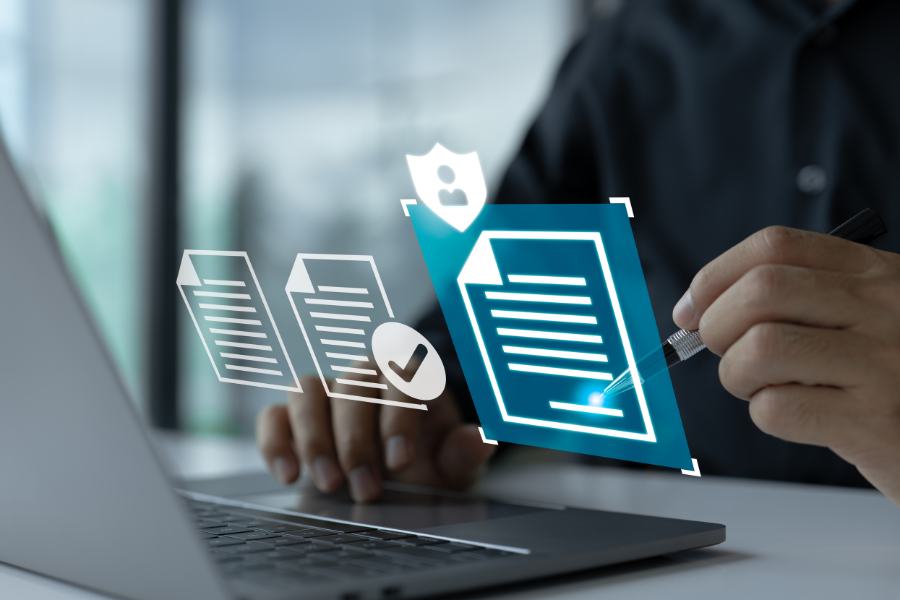
Another key aspect is precise access control. Modern ERP systems implement effective authorization management functions to ensure that employees can only access the data required for their respective tasks. By implementing role-based access rights, access to sensitive information is strictly regulated.
In addition to access control, modern ERP systems offer features such as audit trails and logging to record all activities within the system. This comprehensive monitoring of data access and changes is not only crucial for investigating security incidents but also serves to meet compliance requirements.
Quality management
Quality management capabilities are another important ERP function. By integrating quality management modules, ERP systems enable companies to effectively monitor and ensure quality standards.
This includes monitoring production quality, adhering to industry-specific standards, and conducting quality checks throughout the entire product lifecycle. By systematically collecting and analyzing quality data, companies can identify potential defects early and proactively take measures to improve product quality.
Furthermore, quality management in ERP systems often offers functions such as traceability, batch management, and documentation of quality inspections. These aspects are particularly important in industries where adherence to high quality standards is crucial, such as the food or pharmaceutical industries.
Sustainability management in modern ERP systems
The importance of sustainability is constantly increasing in all areas of our lives and work. Sustainability management in modern ERP systems therefore plays a crucial role in aligning companies with ecological, social, and economic sustainability goals.
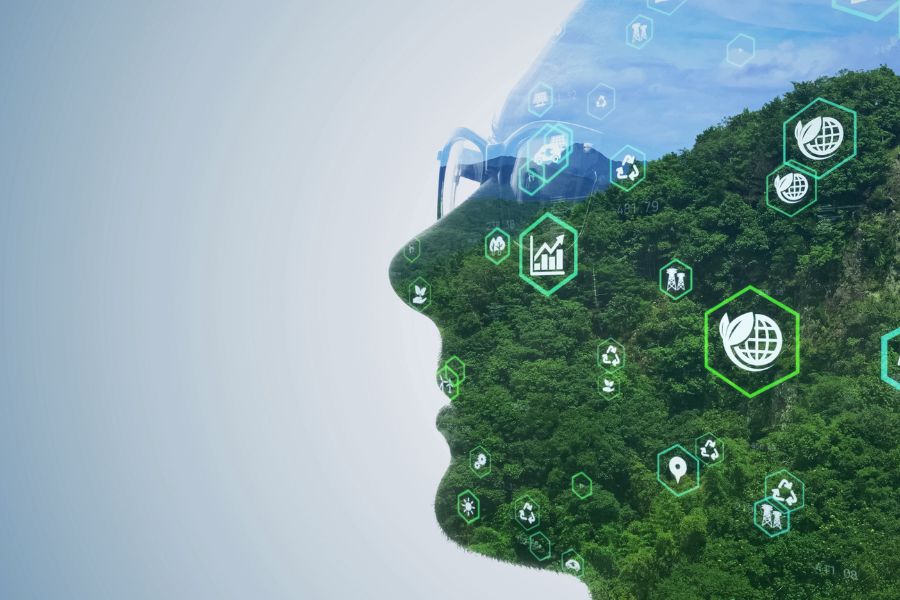
A crucial area where ERP systems support sustainable practices is resource management. By precisely monitoring and managing resources such as energy, water, and raw materials, the ERP system not only enables your company to reduce costs but also contributes to minimizing its environmental footprint.
Waste management functions in ERP systems enable your company to precisely monitor and analyze waste streams. This forms the basis for effective waste reduction and recycling strategies, allowing companies to further strengthen their environmental responsibility.
Integrating sustainability management into ERP systems goes beyond environmental responsibility and influences competitiveness.
Customers and partners increasingly view sustainability as an important factor when choosing business partners. Accordingly, sustainability management within the ERP system not only helps your company achieve its sustainability goals, but also enables it to gain sustainable competitive advantages.
Supply Chain Management (SCM)
Integrating supply chain management (SCM) into ERP systems opens up a new dimension of efficiency and effectiveness for companies in managing their supply chains. ERP systems serve as the backbone of modern businesses, enabling comprehensive control over all business processes – from the transformation of raw materials into finished products to the delivery of these products to end customers. They cover a wide range of key functions, including planning, procurement, production, inventory and warehouse management, and order processing. These functions allow companies to seamlessly coordinate, simplify, and automate their processes. As a result, they can not only reliably meet their customers’ needs but also significantly reduce their operating costs.
A key aspect of this system integration is the consolidation of all business data into a single database. This centralized data repository provides companies with a comprehensive overview of their supply chain activities, finances, and other critical information. Improved information availability fosters collaboration within teams and increases overall efficiency. For example, purchasing managers can optimize procurement, increase production, and simultaneously control costs by accessing precise data regarding supplier agreements, capacities, and customer demand.
The advantages that ERP systems offer in the area of SCM are manifold: increased efficiency through the automation of supply chain processes, increased customer satisfaction through improved planning and more precise delivery forecasts, automation of workflows, a reduction in overhead and operating costs, fewer IT difficulties through simplified integration of different systems, flexible solutions for the supply chain through the use of predictive analytics and scenario planning, and the avoidance of production and supply bottlenecks.
E-Commerce Integration
The convergence of e-commerce with ERP systems marks a turning point for companies aiming to seamlessly integrate their digital sales channels into their internal operations. This advanced connection enables businesses to capture sales activities in real time, automatically synchronize inventory, efficiently manage customer orders, and significantly enhance the customer shopping experience. Centralized control of both data environments ensures companies maintain a consistently up-to-date overview of product availability, pricing, and customer details.
The integration goes a step further by facilitating the automation of key processes such as order processing, invoicing, and delivery logistics. This not only minimizes the need for manual intervention but also reduces the risk of errors. The result is a smoother order flow, leading to increased customer satisfaction and loyalty. A particular highlight is the support for sophisticated features such as personalized customer recommendations based on their previous purchases and behavior patterns, enabling an efficient strategy for upselling and upgrades.
Another key aspect of e-commerce integration with ERP systems is the generation of detailed analyses and reports that provide in-depth insights into customer behavior, sales dynamics, and inventory levels. This valuable information is essential for strategic planning and decision-making to drive business growth and respond to market changes. Furthermore, the integration fosters closer collaboration between departments by providing centralized access to data on sales, customer interactions, and inventory management, which in turn improves internal communication and coordination.
Use modern analysis tools across departments within the company
Modern ERP software systems offer a variety of functions and tools that can benefit many departments within a company. Below, we present some of these comprehensive features.
Most ERP software systems offer a basic system. Each company can then add additional functions for an extra charge. This way, you only pay for the features your company actually uses.
Business Intelligence

The term Business Intelligence, also abbreviated BI, defines all processes and procedures for the systematic analysis of one’s own company.
In modern ERP software, a connection to BI modules is a logical step. The data required for conducting BI analyses is usually already present in the ERP software.
Common areas of analysis include:
- production
- Purchasing
- Sales
- Logistics
- Marketing
- Controlling
The BI module’s analysis functions can help companies, among other things, to analyze inventory levels and procurement costs, or to determine important key performance indicators.
Reporting and accounting
Generally speaking, the BI module is closely linked to reporting and analytics.
The information obtained through business intelligence can therefore be made available to reporting systems immediately for reporting purposes.
Using ERP software functions, it is possible to automatically transfer the collected analysis data to the relevant reports in a time-efficient manner through appropriate automation, without the need for manual transfer or control by employees.
Reporting is an important function for companies, as it can be used to provide support at both the operational and strategic levels.
Artificial intelligence
Artificial intelligence, also abbreviated as AI, is playing an increasingly important role in our lives.
AI is now being used in a variety of ways in internal operating systems as well.
Artificial intelligence can be used in CRM, for example, to quickly and efficiently identify previously unrecognized connections, resulting in a more comprehensive overall picture of the customer base.
Artificial intelligence is also considered a great help in the company’s general and day-to-day operations.
For example, company websites often feature AI-powered chatbots, which are primarily intended to relieve the burden on customer management.
Customers also benefit from AI-powered chatbots through shorter waiting times and other improvements. This also sustainably enhances the customer experience.
Conclusion – Modern ERP functions move your company forward
Depending on your industry and the size of your company, different modules and functions may be advantageous for you. Therefore, we recommend that you consult a specialist before purchasing ERP software to identify a suitable ERP system with the appropriate features for your needs.