
Exciting developments are on the horizon for Enterprise Resource Planning (ERP) in 2024. The ERP market is growing rapidly. Cloud-based ERP systems are becoming increasingly popular, and artificial intelligence (AI) is being integrated more and more into systems. This article highlights the key statistics and trends that will shape the future of
1. Growth of the ERP market
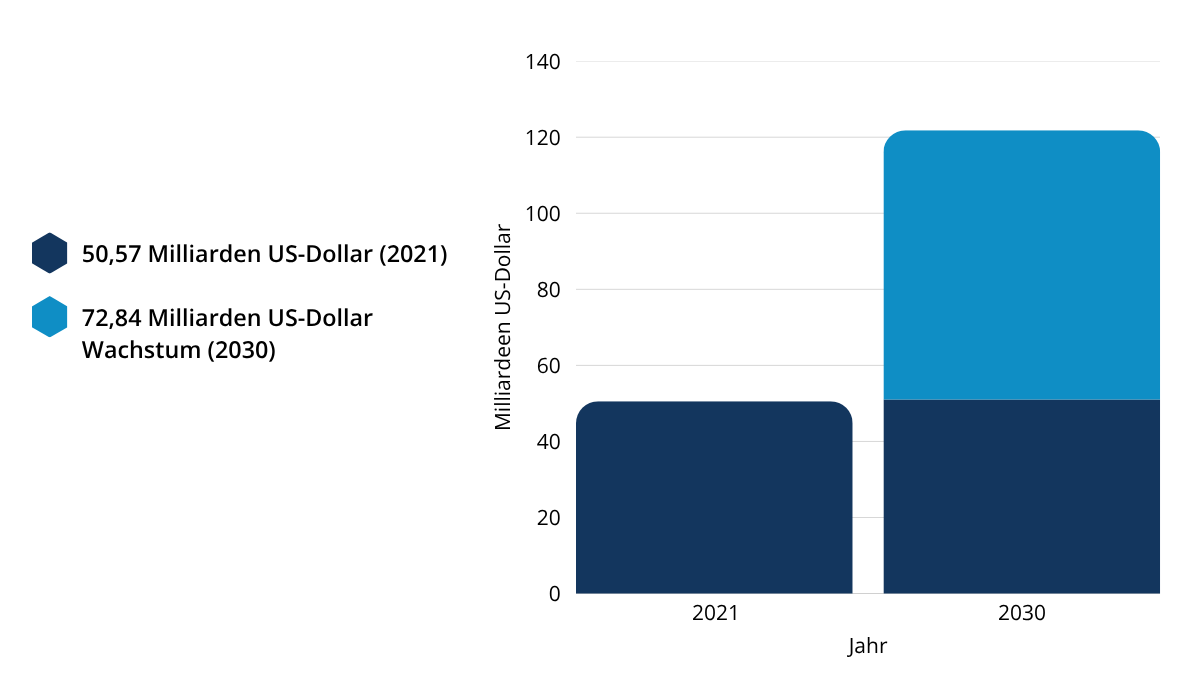
The relevance of ERP is most clearly demonstrated by the impressive growth figures of the global ERP market. In 2021, this market was valued at US$50.57 billion. The forecasts for the coming years are truly remarkable: by 2030, the market is expected to grow to US$123.41 billion. These figures show that companies are investing heavily in ERP systems to optimize their business processes and remain competitive. Investing in ERP systems is not just a technological development, but also a strategic decision that influences the future viability of companies.
2. ROI after ERP implementations
Implementing an ERP system can represent a significant financial burden for companies. Interestingly, however, only 9% of organizations reported seeing no ROI benefits after ERP implementation. 95% of companies report improvements in their processes that they attribute to using ERP systems. This statistic clearly demonstrates that implementing ERP systems is an
3. Cloud-based ERP adoption
A key trend in 2024 is the increasing adoption of cloud-based ERP systems. According to available statistics, 65% of companies already use this modern technology. Cloud ERP solutions offer flexibility, scalability, and cost-efficiency that are attractive to companies of all sizes. Businesses can optimize their operations and adapt quickly to changing market conditions. The fact that 95% of companies would accept cloud-based ERP systems demonstrates that this is not a passing fad, but a sustainable development.
4. ERP success rate
ERP implementation projects are often complex and fraught with challenges. By 2024, approximately 70% of companies would consider their ERP system implementations highly successful. This underscores that businesses are on the right track to improving their business processes and reaping the benefits of ERP systems. However, the remaining 30% face challenges such as budget overruns and delays. Thorough planning and execution of ERP projects are therefore crucial. Only 2% consider their implementation a failure, indicating that the majority of companies successfully overcome these challenges.

5. Reduction of storage costs
ERP systems aim to utilize resources efficiently. Statistics show that they reduce inventory costs by an average of 11%. Best-in-class manufacturing companies have even reduced their inventory costs by an impressive 22% by implementing ERP systems. These figures demonstrate how ERP systems help lower operating costs and increase a company’s profitability.
6. Industry-specific preferences for ERP systems
In 2020, the manufacturing industry was the largest market for ERP systems, with a share of 36.6%. Other important users were services (14%), sales and wholesale (10%), and information technology (5%).
According to the latest statistics from Allied Market Research, the healthcare sector is expected to experience the highest growth rate (CAGR) from 2022 to 2030. This is due to the ability of ERP systems to store large patient records and other quantitative databases. These ERP capabilities are extremely valuable in healthcare and contribute to improving the efficiency and accuracy of patient care.
7. ERP and Artificial Intelligence
Artificial intelligence (AI) is playing an increasingly important role in ERP systems. According to a study by the digital association Bitkom, 15% of companies are using AI in their operations, compared to 9% the previous year. Integrating AI into ERP systems opens up numerous application possibilities, such as digital assistants, intelligent writing tools, and the optimization of inventory levels in warehouse management. AI in ERP systems helps companies make informed decisions and increases their competitiveness.

8. Industry-specific ERP tools
Manufacturing companies prioritize industry-specific ERP tools above all others. Since a food manufacturer has different processes than a company that produces industrial equipment, manufacturers seek ERP tools that support their business objectives. 41% of market leaders and 28% of laggards choose ERP tools that align with their business goals.
9. ERP and Sustainability
In 2024, ERP systems will play a central role in sustainable supply chains for manufacturing companies. They will enable environmentally friendly procurement decisions, the selection of suppliers with sustainable practices, and the optimization of resources. ERP promotes not only efficiency but also sustainability. This is crucial given the growing importance of environmental awareness and social responsibility for businesses.
10. Challenges in ERP Implementation
As statistics show, implementing an ERP system can present companies with various challenges. For 69% of organizations, adapting business processes is the most difficult part of ERP implementation, while only 24% find the technical aspects challenging.
Organizational changes are perceived as difficult by 65% of companies, while only 3% find them easy. Budget and scheduling issues are also common, with only 59% of organizations completing their ERP projects within budget and 64% finishing within the planned timeframe. These statistics highlight that migrating to an ERP system presents both technical and organizational challenges and requires careful budget and time planning.

Conclusion
The ERP world is constantly evolving, and the statistics for 2024 offer interesting insights into the future of this crucial technology. Companies should closely monitor these trends to remain competitive and optimize their business processes.