Industry

Single-unit Production

An ERP system in custom manufacturing helps companies efficiently plan, manage, and monitor individually manufactured products. Because every order in custom manufacturing is unique, ERP systems must be particularly flexible. Our ERP solution, AvERP, provides this flexibility. It enables the seamless integration of all business processes – from quotation creation through design, purchasing, and production to delivery and post-calculation. Key features include project management, order-specific bills of materials, variant configuration, and capacity planning. The goal is to ensure transparency, on-time delivery, and profitability, even for complex, one-off orders.

AvERP in single-unit production

AvERP allows you to optimize all your business processes. Specifically, this means that with AvERP, your company can benefit from improved workflows or optimized processes in the areas of human resources and finance, supply chains, and manufacturing.

Historically, most ERP software solutions for single-item manufacturing are based on evolved software programs adapted to current standards and the broader requirements of businesses. Technologies such as artificial intelligence, machine learning, and the latest manufacturing processes play a significant role here. Cloud-based solutions are also indispensable.

AvERP supports you in almost all areas of single-item manufacturing – effectively, efficiently and profitably.

Advantages of an ERP system for your company

An ERP system for discrete manufacturing must meet certain requirements, such as being self-adapting and learning. Furthermore, the machinery and plant engineering sector, particularly in discrete manufacturing, is subject to constant change in the form of modernization. This presents challenges for small and medium-sized enterprises (SMEs) with their internal processes, making flexibility in the ERP system essential. With AvERP, you benefit from several advantages:

  • flexible response to all changes in ongoing operations.
  • Solving typical challenges in mechanical and plant engineering through optimal use of AvERP.
  • Optimization of existing processes, supply chains and manufacturing cycles.
  • Evaluation of all relevant customer data without data loss.
  • Early detection of risks in the production process.
  • Rapid response to changing customer requirements.

Above all, the ability to react quickly to changing customer requirements is a crucial factor for a company’s efficient operations. In mechanical and plant engineering, series production, single-unit production, and variant manufacturing are particularly common. These production variants require individual production and resource planning. ERP software for single-unit production can specifically address aspects such as materials management and production planning. For series production, maximum automation is a key consideration.

This allows your company to shorten and simplify complex processes and lead times in manufacturing or design for single or series production.

Acquiring the right ERP software for single-unit production

Individual requirements demand individual software solutions. The interplay of the individual components is a particularly important factor in mechanical and plant engineering. Therefore, ERP software for this sector should include the following functions:

  • Planning and optimization of single-unit, series and variant production
  • Bills of materials
  • Serial number histories and equipment records for purchasing and sales
  • Offer versioning
  • Offer configurator (including generation of sales bills of materials and display of configuration dependencies)
  • Wear parts management: Administration and coordination
  • Complaint management: serial number-specific and flexible
  • Documentation and tracking of externally produced manufacturing parts (keyword: extended workbench)

With this range of functions, ERP software for single-item manufacturing offers a broad range of features that can increase the value chain in your company. Open-source systems like AvERP offer the advantage of being customizable on-site to meet the individual needs of the customer. This saves considerable development time and costs.

Sufficient buffer time should be planned for the implementation of the ERP software system. Individual consultation with the manufacturer will help to precisely define this timeframe based on your specific requirements.

ERP Single-unit production: Increasing competitiveness in all business areas

Following the successful implementation of an ERP system, a significant increase in competitiveness is evident across all business units. The following business units and areas of responsibility illustrate the substantial potential for productivity gains at each level.

Resource management

Here, costs can be saved and productivity increased. ERP software in mechanical engineering helps to increase machine capacity and material inventories. Furthermore, it enables effective personnel management and conserves employee resources. Precise data analysis allows for the early identification of bottlenecks within the company, successful optimization of inventory levels, and maximization of machine utilization. This leads to long-term improvements in the efficiency of your equipment and your employees.

Integrate business processes

ERP software allows you to improve the integration of various business processes. This enables you to link all processes, from order placement and material procurement to delivery. This automatically leads to improved communication and thus better collaboration between departments. Furthermore, information about the entire production cycle is stored and made available in real time.

Improving quality management

Quality is of paramount importance for the products of the mechanical and plant engineering sector. Only through innovation and quality can companies today differentiate themselves from the competition, especially from Asia. Modern ERP solutions enable precise adherence to quality standards in this industry. This includes, above all, the seamless traceability of the machines, materials, and processes used. Furthermore, quality controls can be integrated into ongoing operations. Companies thus benefit from the early detection of errors and can intervene in the production process in a timely manner to prevent scrap. This saves costs and increases flexibility.

Documentation

Documenting processes and products is particularly important in a highly regulated industry like mechanical and plant engineering. ERP software solutions for mechanical engineering help meet the necessary compliance requirements. This is ensured, for example, through automated reporting and audit-proof documentation. This reduces errors and avoids costly fines.

Customer Relationship Management (CRM)

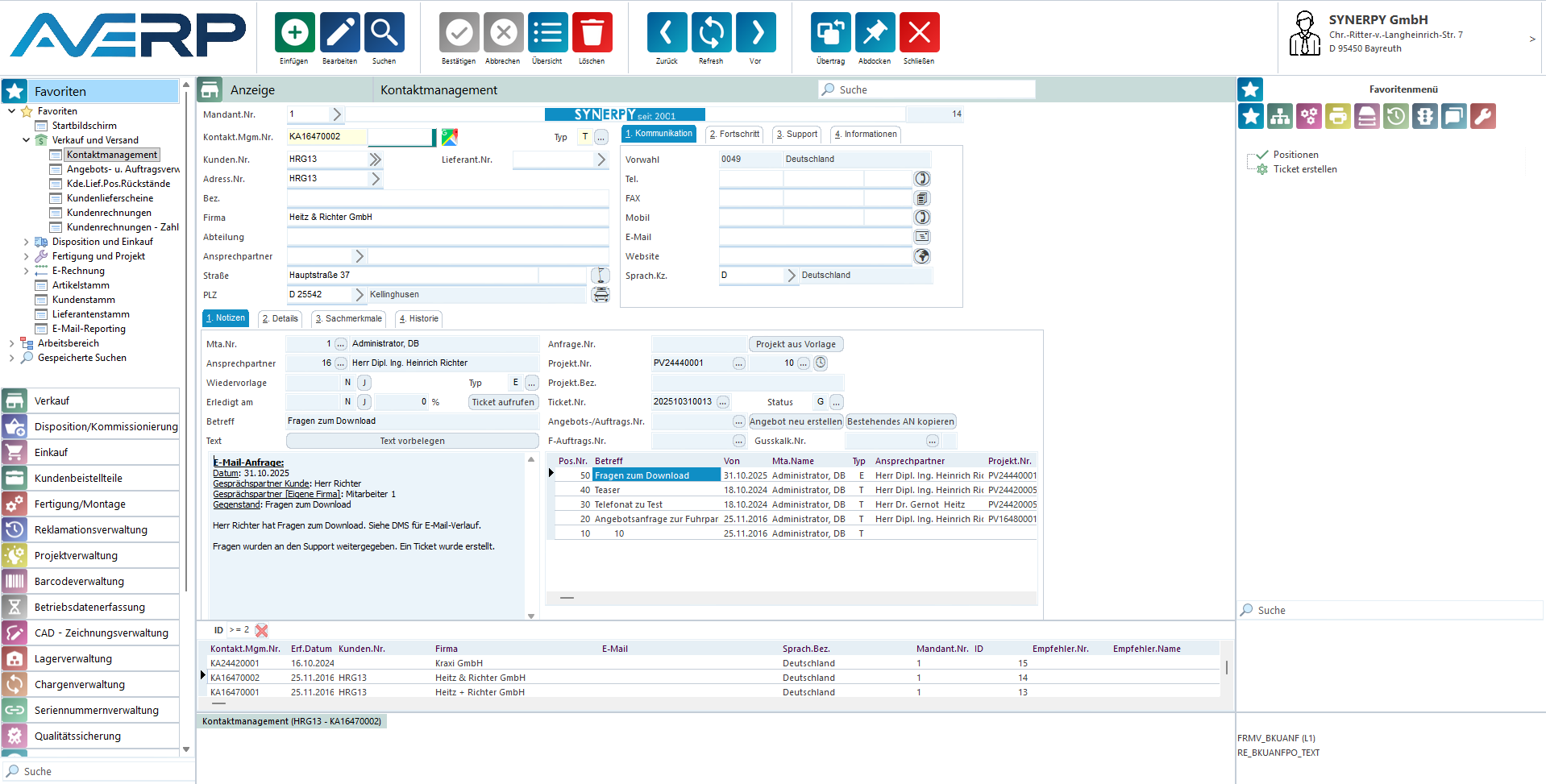
ERP software is also successfully used in customer relationship management. Integrated CRM functions enable a holistic view of customer requirements. Customer needs vary from customer to customer and are often diverse, complex, and require individual measures and solutions. Whether orders or service requests: an ERP system always ensures the right overview. Even customer-specific adjustments can be easily accommodated. This not only optimizes the supply chain but also strengthens customer loyalty.

Project management and order processing

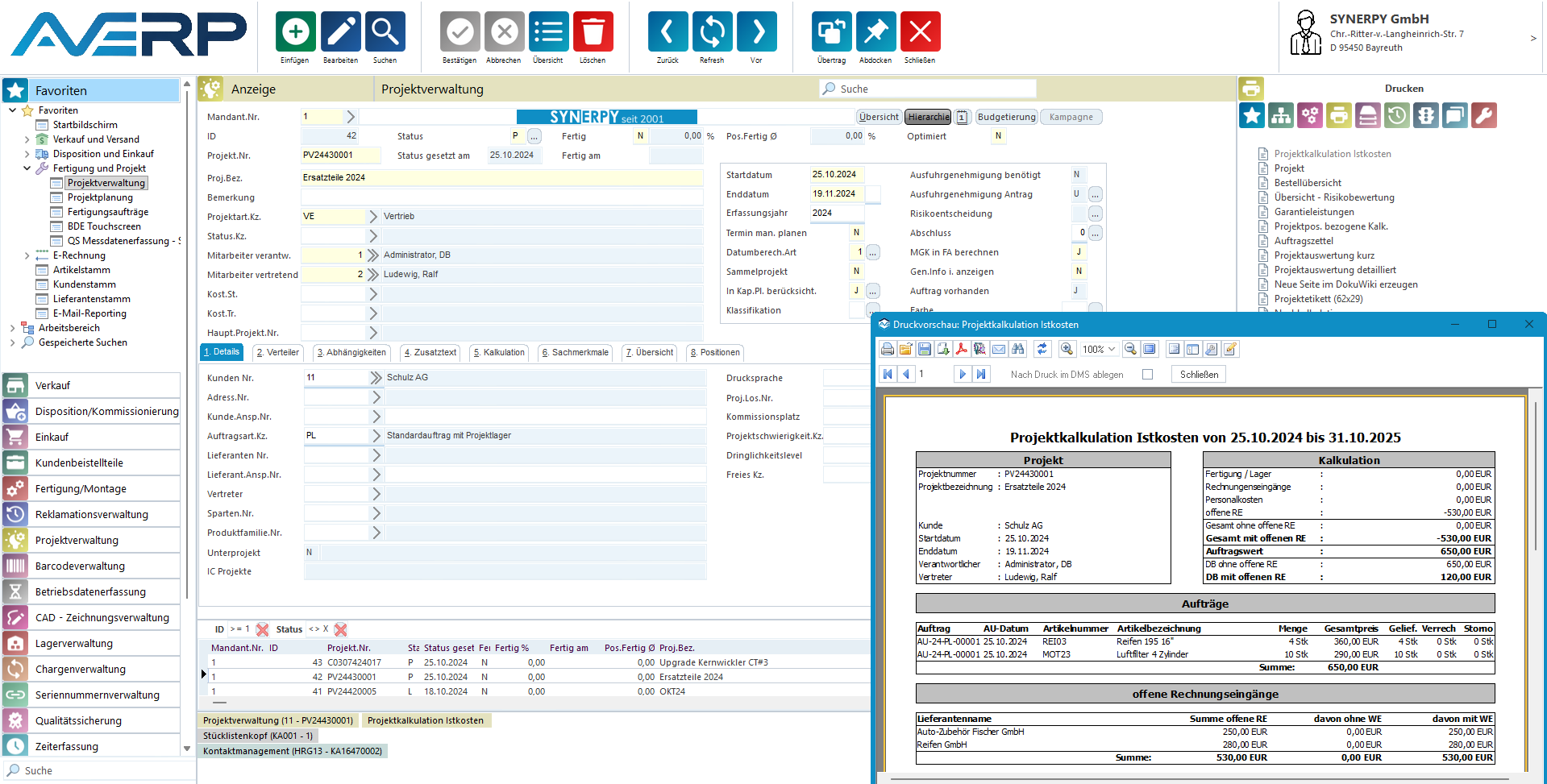
ERP systems for discrete manufacturing enable detailed planning and monitoring of projects. Each order is treated as an independent project, allowing for precise resource planning and deadline control. This is crucial for managing the complexity of discrete manufacturing, where each product has unique requirements and specifications.

Bill of materials and variant management

Bills of materials and product variants are ubiquitous in mechanical and plant engineering. ERP software for discrete manufacturing enables the efficient management of bills of materials, including all required components and materials. At the same time, it supports the management of product variants, thus facilitating adaptation to individual customer requirements.

Material and warehouse management

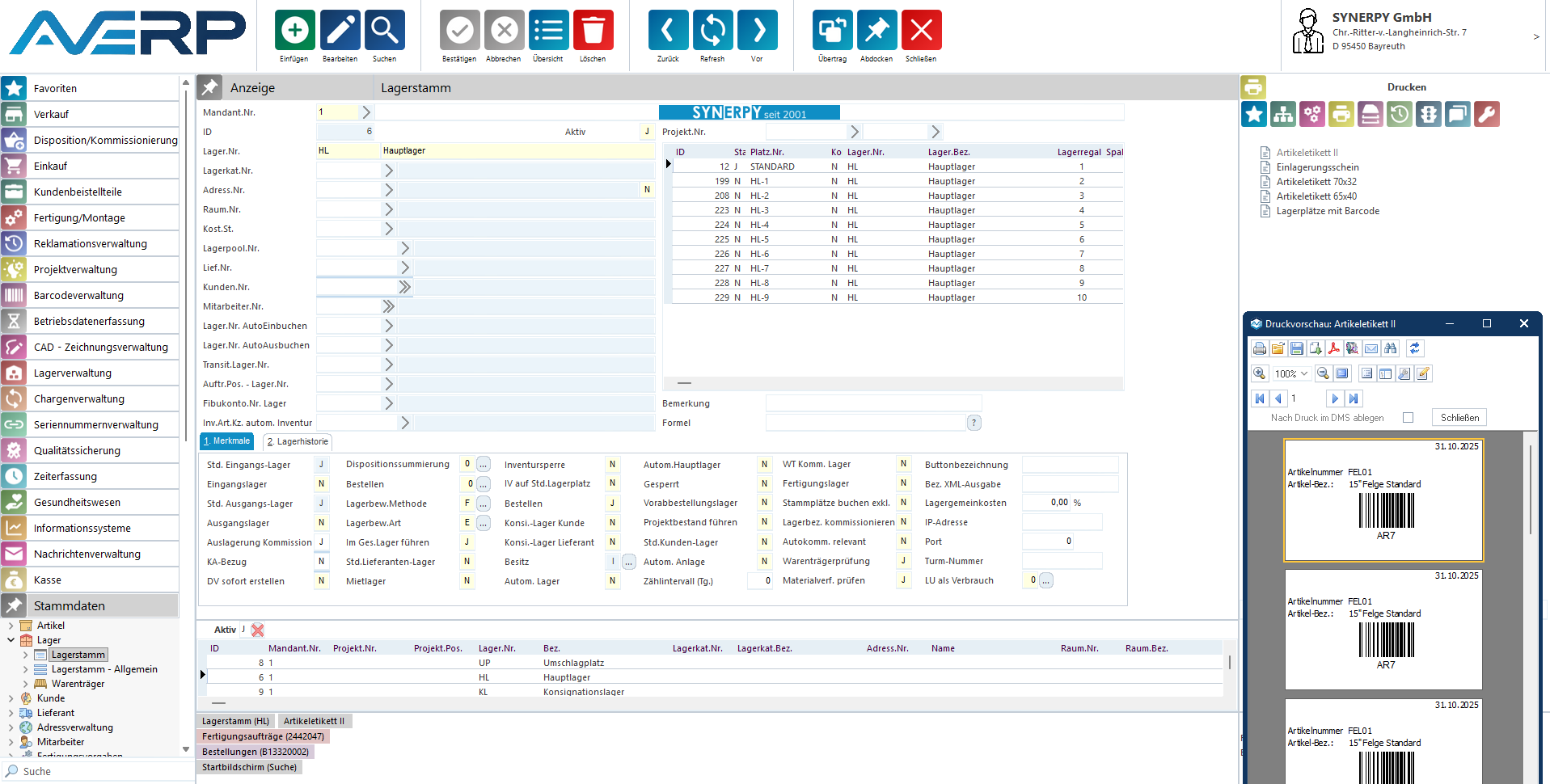
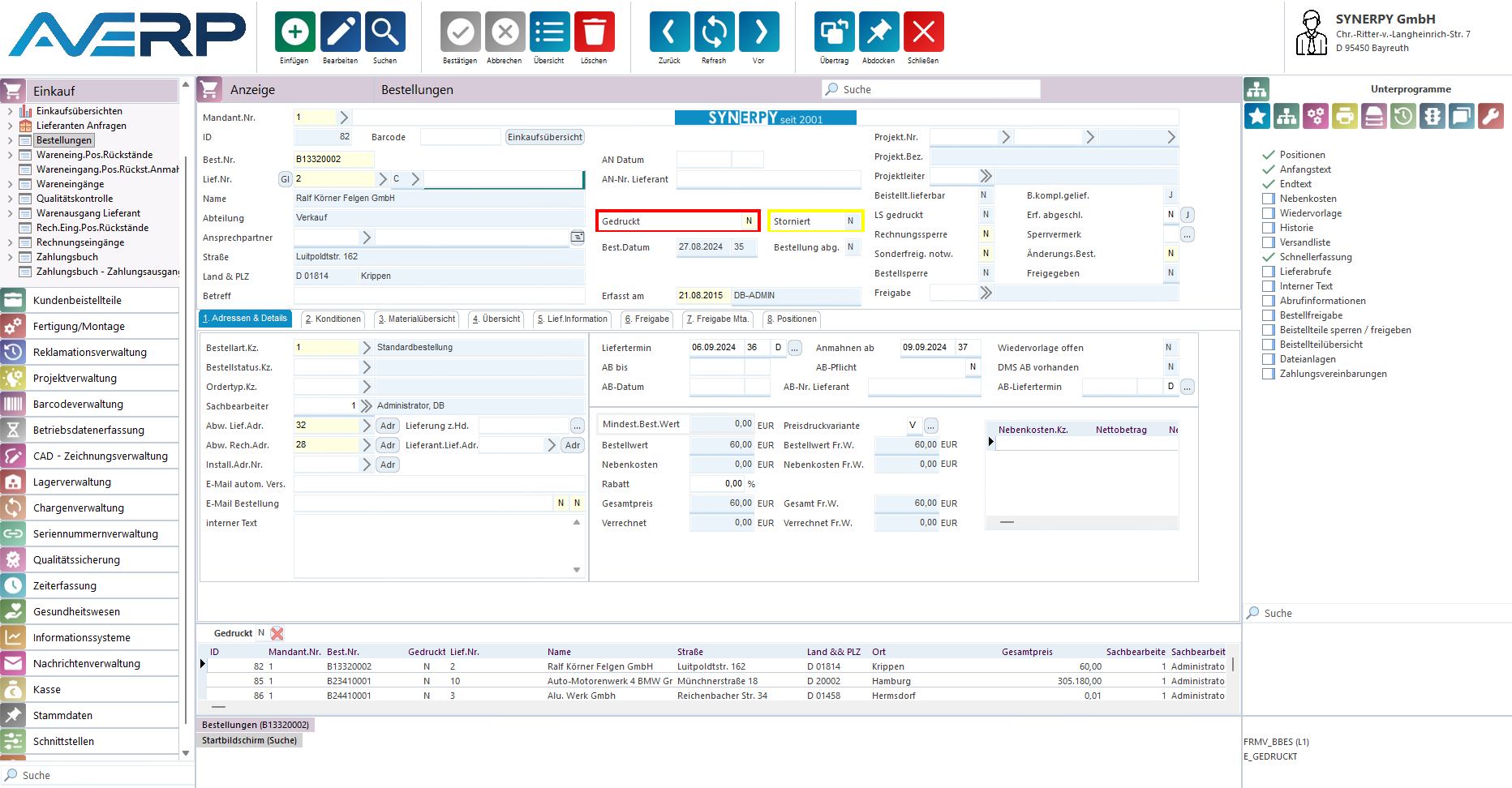
Precise material management is crucial in make-to-order manufacturing. ERP systems integrate material flow and warehouse management, giving companies a clear overview of their inventory levels. This reduces the risk of material shortages and supports cost-effective procurement.

The license-free ERP system for small and medium-sized enterprises.

Advantages for ERP single-unit production

The advantages of high-quality ERP software are indispensable in custom manufacturing. Implementing an ERP system allows even the smallest companies to manage the complexity of their processes while simultaneously responding flexibly to customer requirements. Through precise planning, efficient resource allocation, and continuous monitoring, ERP software contributes to increased efficiency and strengthens competitiveness in this dynamic sector.

Conclusion: ERP in single-unit production

ERP software in discrete manufacturing is more than just an administrative solution. It’s a strategic tool that helps companies become more agile, efficient, and competitive. Business process integration, precise resource management, ensuring quality standards, effective customer relationship management, and compliance with regulatory requirements are crucial success factors in this demanding industry.

AvERP. Tailor-made, yet standard.

The license-free ERP system for small and medium-sized enterprises.