
Industry

Mechanical and plant engineering

Do your customers want a reliable partner who not only delivers high-quality work but also completes tasks as quickly as possible? With its comprehensive capabilities, AvERP helps your company meet your clients’ requirements to their complete satisfaction.

Given the complex and steadily increasing demands within the mechanical and plant engineering industry, there is a need for a correspondingly multifaceted ERP system capable of seamlessly linking all processes and development workflows.

The following article provides you with all the necessary information about ERP systems, as well as any aspects you should consider when selecting suitable ERP software.

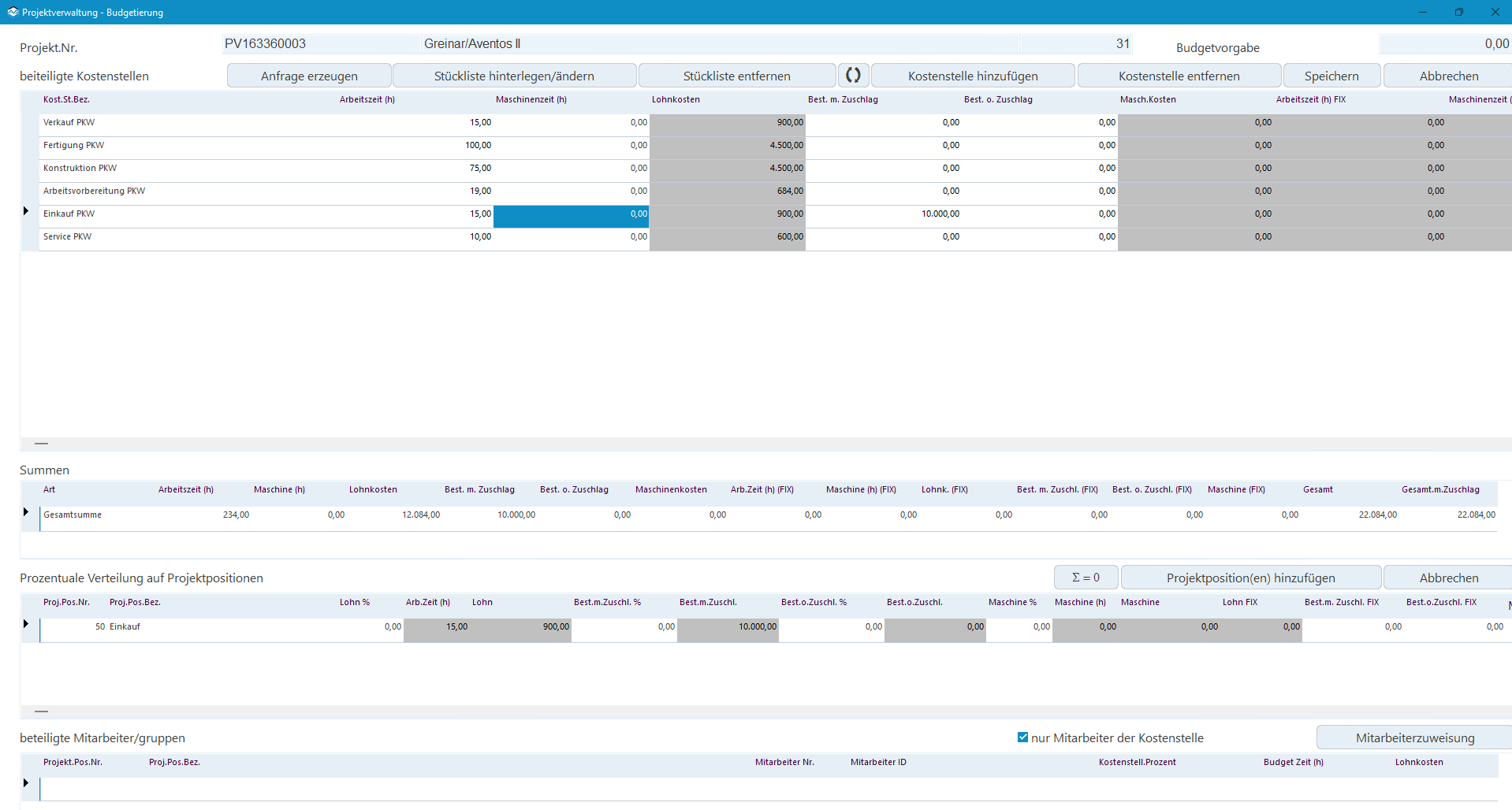
Mechanical & Plant Engineering mit AvERP

In addition to the standard modules of our free ERP system AvERP—covering sales (including CRM), purchasing, manufacturing and assembly, warehouse management, production planning, personnel management and time tracking, as well as complaint management—we offer processes optimized for mechanical engineering, including the following modules (which are, of course, also available completely free of charge):

  • Series, variant, and single-part or small-series production
  • Alternative position in parts lists
  • Serial number history and device file (purchasing and sales side)
  • Offer configurator with generation of sales bills of materials and configuration dependencies
  • Offer versioning
  • Tracking of outsourced parts / extended workbench
  • Serial number-specific complaint management
  • Management of wear parts

What is an ERP system?

ERP software is a software system that allows you to optimize all your business processes. The software supports you in automating processes in finance, human resources, supply chains, and manufacturing. Generally speaking, enterprise resource planning software is not a new phenomenon. in industry. Nevertheless, it must be noted that today’s ERP systems bear little resemblance to earlier software systems. The primary reason for this is the use of the latest technologies, such as artificial intelligence and machine learning, which ensures companies achieve maximum efficiency and automation in their production. Modern cloud ERP software also streamlines internal processes. Processes are linked with networks and stakeholders around the world, enabling competitive collaboration and agility in all areas of the business.

Special features in plant and mechanical engineering

In general, the plant and mechanical engineering sector is subject to constant change and modernization. Nevertheless, many internal processes, especially in small and medium-sized enterprises, are still handled manually.

AvERP is modern and precision-engineered to adapt flexibly to any changes and to master the typical challenges of plant and mechanical engineering.

The advantages of an ERP system in mechanical engineering are as follows:

The last point is particularly important for efficient operations within a company. In mechanical and plant engineering, there are various manufacturing methods, such as series production, single-unit production, and variant production. These different production types require correspondingly individualized resource and production planning. For example, while the production of individual pieces and small batches necessitates flexible materials management and strategic production planning, series production prioritizes maximum automation. A unified database within the ERP system therefore ensures that all necessary data is always up-to-date and complete, thus preventing system disruptions.

Specialized tools are used to check and filter the data, enabling demand forecasts, reports, and liquidity checks at any time. This is crucial in mechanical and plant engineering, as certain risks must be identified as early as possible to modify and optimize existing processes accordingly. Furthermore, the ERP system significantly shortens and simplifies complex overall processes and lead times in design and manufacturing. This applies to both individual orders and small production runs made to customer specifications.

AvERP-Logo

The license-free ERP system for small and medium-sized enterprises.

What should be considered when purchasing ERP software?

Generally speaking, ERP software for plant and mechanical engineering must specifically respond to the complex and growing requirements of the industry in order to secure long-term business success and competitiveness.

The focus is less on the individual functions of the software system, but rather on the interaction of the individual components.

Essential Capabilities of an ERP System for Machinery and Plant Engineering

Find the optimal inventory management system for your mechanical engineering company

In principle, an ERP system for the mechanical and plant engineering sector should always be able to react flexibly and precisely to the growing demands of the industry if your company’s long-term success is to be secured.

Therefore, when selecting an ERP software system, it is essential to ensure that the software supports all features relevant to your company.

There are some basic principles you should consider when choosing the right system:

Easy integration into various processes

When choosing an ERP system, you should ensure beforehand that it is an integrated ERP solution. These are generally less prone to errors and offer a unified user interface for your company. Easy integration into various processes offers the advantage of significantly simplifying data exchange with external partners. A mobile application for the software system also allows work processes to be managed remotely. This is a crucial benefit, especially for service technicians and sales staff.

Flexibility and customization

Within a production process in the field of mechanical and plant engineering, customer needs and market requirements can constantly change, so production must be adapted accordingly.

To work efficiently, minimize process costs and ensure the competitiveness of your company, your ERP system should be able to react flexibly to new processes and changes.

Comprehensive support during implementation

Generally speaking, you should consider external development, implementation, and support of an ERP system even before its actual implementation. Therefore, request realistic project plans from various ERP system providers to ensure you are optimally prepared for implementation and can ultimately save resources within your company.

AvERP-Logo

The ERP system for mechanical and plant engineering.

Investing in an integrated ERP system is worthwhile in mechanical and plant engineering.

In principle, investing in an ERP system tailored to the specific and flexible requirements of the plant and mechanical engineering sectors can certainly benefit your company. With specific functions adapted to industry needs, AvERP contributes to competitiveness and corporate success.

In the future, your company will no longer face issues such as flawed internal communication, disorganized documents, or incorrect bills of materials. For many companies, the priority extends beyond simply manufacturing flawless machines; with AvERP, you also optimize order time management, leading to an overall increase in your company’s efficiency.

To ensure your company achieves maximum success, it is crucial to determine in advance which functions your software system should include to handle day-to-day business tasks. Thanks to its flexibility, AvERP can be adapted to and extended for almost any business process.

Frequently asked questions

Why are ERP systems important for mechanical engineering?

In mechanical engineering, complex processes and efficient resource planning are of paramount importance. An ERP system enables companies to optimize their production processes, utilize material and human resources effectively, and better manage the supply chain. It also supports compliance with quality standards and the fulfillment of customer requirements.

The cost of an ERP system in mechanical engineering varies depending on the provider, system scope, implementation effort, and licensing model. There are both cloud-based ERP systems with monthly subscriptions and on-premises installations with one-time license fees. It’s important to consider the total cost, including implementation, customization, training, and ongoing maintenance. Learn more in our guide, “What Does an ERP System Cost?”

The implementation time for an ERP system in mechanical engineering can vary depending on company size, the complexity of business processes, and customizations. Typically, implementation takes several months to a year. It is important to establish realistic timelines and allocate the necessary resources for successful implementation.

AvERP. Tailor-made, yet standard.

The license-free ERP system for small and medium-sized enterprises.