
In today’s business world, efficient processes and optimized workflows are crucial for companies. To achieve these goals, businesses have various software solutions at their disposal, including CRM and ERP systems. But what exactly do these terms mean? What is the difference between CRM and ERP? And which system is right for your company? Here, we will compare CRM and ERP systems in detail and help you make the best decision.
Effective customer relationship management (CRM) and a powerful enterprise resource planning (ERP) system are indispensable tools for companies of all sizes and industries. While both systems aim to improve business processes and increase productivity, their focus lies in different areas.
CRM systems focus on the customer lifecycle and help companies cultivate and strengthen customer relationships. They support sales and marketing teams in managing customer contacts, tracking sales activities, and analyzing customer behavior. A CRM solution enables companies to centrally store customer data, track customer interactions, and measure the effectiveness of marketing campaigns.
In contrast, ERP systems focus on the efficient management of resources and processes within a company. They integrate various business areas such as finance, purchasing, warehousing, production, and human resources into a central database. By automating and optimizing business processes, ERP systems enable better planning, control, and monitoring of resources and provide real-time insights into operational processes.
Although CRM and ERP systems have different focuses, they often complement each other and can be seamlessly integrated to give companies a comprehensive overview of their customers and business processes. Here, we will examine the main differences between CRM and ERP systems in detail and help you choose the right system for your company’s needs.

Whether you are looking for a solution to improve customer satisfaction or to increase the efficiency of your business processes, understanding the differences between CRM and ERP systems is crucial for making informed decisions.
Read on to learn more about the specific features, benefits, and applications of both systems and find out which system best suits your business goals.
CRM: Successfully managing customer relationships
Let’s start with the CRM system, which stands for Customer Relationship Management. As the name suggests, this system focuses on managing and maintaining customer relationships. It helps companies store, organize, and track all information about their customers. CRM software can be used in various business areas, including sales, marketing, customer service, and business development.
CRM solutions offer a variety of features that help businesses optimize their customer relationships. These include:
Marketing integration and automation
A CRM system enables companies to effectively plan and manage their marketing activities. It offers features such as lead management, email campaigns, and marketing campaign analytics.
Sales management and automation
A CRM system enables companies to effectively plan and manage their marketing activities. It offers features such as lead management, email campaigns, and marketing campaign analytics.
3. Customer service and support
A CRM system enables companies to improve customer service and process support requests efficiently. This allows customer inquiries to be answered quickly and satisfactorily.
Analysis and reporting
CRM systems offer comprehensive analytics capabilities that enable companies to gain valuable insights into their customers. This information helps identify upselling and cross-selling opportunities and facilitates informed decision-making.
Social Media
A CRM system enables companies to effectively utilize social media by tracking and centralizing customer interactions on social media, providing real-time monitoring, offering fast customer support, developing personalized marketing campaigns, supporting influencer management, and measuring the performance of social media activities.
Contact management
A CRM system enables companies to effectively improve contact management by providing a central database for contact data, ensuring up-to-dateness, enabling organization and segmentation, storing the history of customer interactions, automating tasks, and providing analysis functions.
Lead Management
A CRM system helps companies manage leads by capturing, qualifying, tracking, and automating nurturing processes. Through analytics and team communication, it improves efficiency and increases conversion rates.
A CRM system is a valuable tool for companies that want to improve their customer relationships and maximize their revenue potential. It enables efficient management of customer data and helps companies offer personalized service and build customer loyalty.
The core functions of a CRM system enable companies to track the entire customer lifecycle, from lead generation to after-sales service. By centrally storing all relevant customer information, companies can create personalized marketing campaigns, coordinate sales activities, and ensure efficient customer service. Furthermore, analyzing customer data allows companies to gain valuable insights and build their business strategies on data-driven principles.
It’s important to note that a CRM system isn’t solely designed for customer relations, but also supports internal business processes. The seamless integration of sales, marketing, and customer service functions enables efficient collaboration and improves internal communication.
In addition to CRM systems, there are also ERP systems. An ERP system helps companies manage their resources efficiently and optimize their business processes. It provides a holistic view of the company and integrates various areas such as purchasing, production, warehouse management, logistics, financial accounting, and human resources management.
The advantages of an ERP system are numerous:
1. Increased efficiency
By integrating various business processes, an ERP system enables more efficient use of resources. It avoids redundancies, improves communication between departments, and facilitates better collaboration within the company.
2. Cost optimization
An ERP system helps companies reduce costs by automating and optimizing processes. It enables better resource planning and reduces the need for manual intervention, leading to savings.
3. Real-time information
Using the central database of an ERP system, employees can access information in real time, leading to better decision-making and faster response to business needs.
4. Scalability
An ERP system is scalable and can grow with the company. It allows businesses to add new locations, introduce new products, and adapt their business processes.
CRM vs. ERP: The differences in detail
Although both CRM and ERP systems help companies optimize their processes, there are some key differences between the two systems.
1. Focus
A CRM system focuses primarily on managing customer relationships and optimizing sales and marketing processes. An ERP system, on the other hand, covers a broader range of business processes and focuses on resource management.
2. Functionality
While a CRM system primarily offers features such as lead management, sales automation, and customer service, an ERP system encompasses a wide range of ERP functions, including purchasing, production, warehousing, financial accounting, and human resource management.
3. Integration
CRM systems can typically be seamlessly integrated with an ERP system to provide a comprehensive solution for customer and resource management. This integration enables smooth data exchange between the two systems and efficient collaboration across different departments.
4. Target group
The CRM system is primarily aimed at sales, marketing and customer service teams, while an ERP system is relevant for the entire company and supports various departments.
It is important to understand the differences between CRM and ERP systems to meet your company’s specific needs. While a CRM system focuses on customer relationships and sales, an ERP system offers a more comprehensive solution for resource management and optimizing internal business processes.
ERP and CRM: Integration for maximum efficiency
Although CRM and ERP systems have different focuses, combining them can offer an even more effective solution. Integrating CRM and ERP systems allows companies to ensure seamless collaboration between sales, marketing, customer service, and other departments.
The integration of CRM and ERP systems offers several advantages:
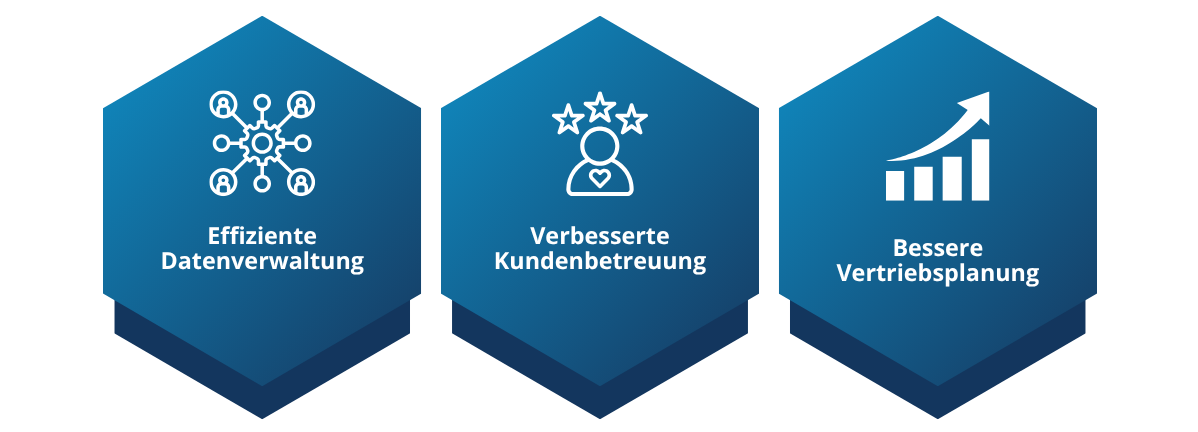
1. Efficient data management
Through integration, customer information is stored in a central system and can be used by all relevant departments. This avoids redundant data and ensures a consistent data set.
2. Improved customer service
Integrating CRM and ERP systems can give companies a holistic view of their customers. This enables them to offer personalized service and process customer inquiries efficiently.
3. Better sales planning
Integrating CRM and ERP systems enables companies to improve management of their sales pipeline and create more accurate sales forecasts. This facilitates efficient planning of sales activities and optimized resource allocation.
Integrating CRM and ERP systems requires careful planning and implementation, but the benefits can be significant. Companies can increase their efficiency, optimize processes, and offer better customer service.
Through integration, companies can, for example, use customer data from their CRM system to manage sales opportunities and activities within their ERP software. Customer-specific information such as orders, invoices, and payments can be seamlessly exchanged between the systems, leading to more efficient order processing.
Furthermore, the integration of CRM and ERP systems enables better analysis and reporting. Companies can gain more comprehensive insights into customer behavior, sales results, and financial metrics by combining data from both systems. These insights can help make informed decisions, develop targeted marketing campaigns, and drive business growth.

It’s important to note that integrating CRM and ERP systems isn’t always straightforward. The two systems have different data structures and functionalities that need to be harmonized. Thorough planning, close collaboration with the relevant departments, and potentially the support of IT experts or external consultants are crucial for ensuring successful integration.
Overall, the integration of CRM and ERP systems can help companies optimize their processes, increase efficiency, and improve customer service. Through the close collaboration of customer relationship management and resource management, companies can gain a holistic view of their business and strengthen their competitiveness.
Conclusion
The decision between a CRM and an ERP system depends on your company’s specific needs. A CRM system is ideal if you want to improve your customer relationships and optimize sales and marketing processes. An ERP system, on the other hand, offers a comprehensive solution for resource management and allows you to make your business processes more efficient.
Ideally, companies can benefit from the integration of CRM and ERP systems. This enables a holistic view of customers and resources and facilitates efficient collaboration between different departments.
Overall, choosing the right system is crucial for your company’s success. Consider your specific requirements and goals and make an informed decision. A CRM system, an ERP system, or a combination of both can help you increase efficiency, reduce costs, and improve your customer relationships.