Industry

Logistics

Efficient and well-organized logistics processes are crucial for the smooth operation of supply chains and the success of a company. In a world where the demands on the logistics industry are constantly growing and changing, it is essential to consider advanced technologies and solutions to meet these challenges.

In this context, enterprise resource planning (ERP) has proven to be an extremely useful tool, helping logistics companies optimize their logistics processes, manage information, and utilize resources effectively. ERP software provides an integrated platform that enables companies to coordinate and control various aspects of their logistics processes, from procurement and warehouse management to distribution.

Here you can learn more about the exciting world of ERP in logistics. After reading this article, you will understand how this advanced technology is fundamentally changing the way companies tackle their logistics challenges.

AvERP for the logistics industry

The logistics industry is constantly evolving, and companies must be able to adapt to new requirements and challenges. An AvERP system offers the flexibility and scalability to meet these changes. The integration of modern technologies such as artificial intelligence and the Internet of Things opens up further opportunities to increase the efficiency and performance of ERP systems in logistics.

Overall, AvERP offers A solid foundation for companies to optimize their logistics processes, reduce costs, and strengthen their competitiveness. By implementing ERP, companies can build a more efficient and transparent supply chain and better serve their customers. Clearly, ERP systems for logistics are a valuable investment that can help companies succeed in an increasingly competitive world.

Advantages of ERP in logistics

Implementing an ERP system in logistics offers numerous advantages that help companies optimize their logistics processes and increase their competitiveness. Here are some of the most important benefits of ERP in logistics:

The license-free ERP system for small and medium-sized enterprises.

The most important modules for an ERP system in logistics

A comprehensive ERP system for logistics includes various modules that are specifically tailored to the requirements and processes in the logistics industry and support you in the entire supply chain management.

Warehouse Management System (WMS)

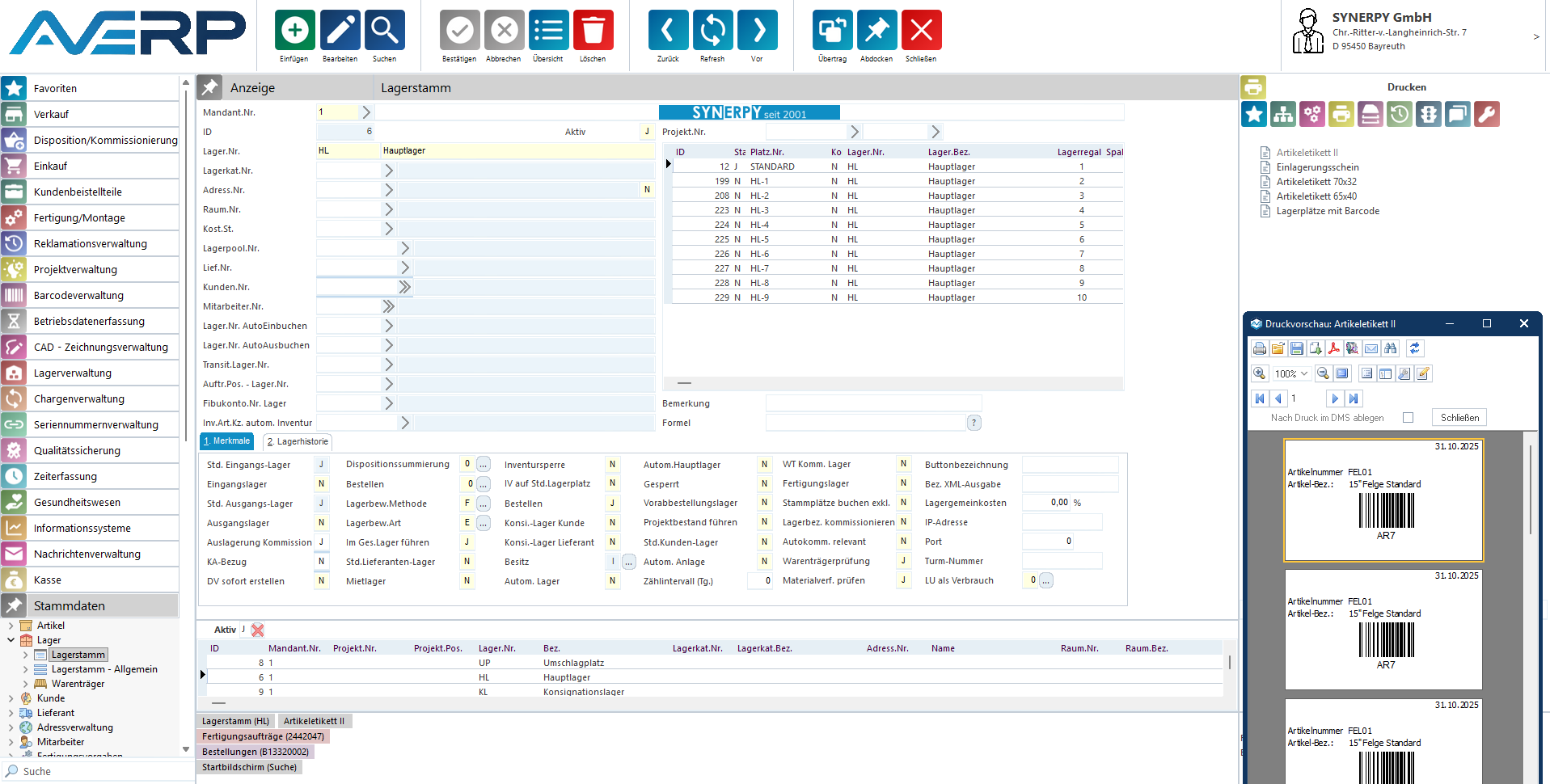
The WMS module enables efficient management and control of inventory. It includes functions such as stock tracking, storage location optimization, putaway and retrieval strategies, inventory valuation, batch and serial number tracking, and inventory management. Through integration with other modules such as purchasing, sales, and shipping, the WMS module allows for seamless control of warehouse activities.

Procurement management

Procurement management helps companies efficiently procure goods and materials. It includes functions such as supplier management, order processing, inventory management, price and contract negotiations, and supplier performance monitoring. By automating procurement processes, companies can optimize their supply chains and reduce the need for manual intervention.

Transportation management

Transport management enables the planning, monitoring, and optimization of transport activities. It includes functions such as route planning, freight cost calculation, cargo tracking, fleet management, and supplier collaboration. Through integration with other modules such as order processing and warehouse management, the transport management module enables seamless control of the entire transport chain.

Order processing

Order processing helps companies efficiently handle customer orders. It includes functions such as order acceptance, order tracking, inventory reservation, order fulfillment, invoicing, and returns management. Through integration with other modules like warehouse management and shipping, the order processing module enables seamless control of the entire order process.

Electronic Data Interchange (EDI)

EDI enables automated exchange Electronic data exchange between different systems leads to faster and more precise communication between suppliers, freight forwarders, retailers, and other partners in the supply chain. The elimination of manual data entry and transfer optimizes processes and reduces errors.


These modules are just a few examples of the functions an ERP system can offer for logistics. Integrating these various modules into a unified ERP software enables companies to holistically manage their logistics processes.

Data can be seamlessly exchanged between modules, leading to efficient collaboration between different logistics functions and optimized supply chain performance. The selection of the right modules depends on the individual situation and the company’s objectives.

AvERP. Tailor-made, yet standard.

The license-free ERP system for small and medium-sized enterprises.