In an increasingly globalized and technology-driven business world, companies face the challenge of making their operational processes more efficient. to design and simultaneously manage complex business processes. Here’s where ERP systems come into play, which have evolved over the years to meet changing requirements and help companies become more competitive.
The software consists of a variety of modules that cover specific business functions. These include areas such as financial management, purchasing and supply chain management, production and manufacturing, sales and marketing, human resources, and many more. Each module focuses on a particular business activity and ensures that all information and processes are seamlessly connected.
The central idea behind an ERP solution is to capture, store, and share all important data and information in real time. This gives employees at different levels of the company access to the same up-to-date information, improving communication and collaboration. For example, sales representatives can enter customer orders directly into the system, and this information is automatically forwarded to the production department to initiate the order fulfillment process.
An ERP solution also offers comprehensive reporting and analysis functions that enable companies to collect and analyze data from various areas. This facilitates informed decision-making based on up-to-date information and contributes to the optimization of business processes and increased efficiency.
Finally, implementing ERP software also requires careful planning and adaptation to the specific needs of a company. The software can be operated either as an on-premises solution or deployed via the cloud, which offers companies greater flexibility and scalability.
Overall, ERP software is a powerful tool that helps companies use their resources efficiently, optimize operational processes, and gain a holistic view of their business. By integrating various business functions into a single system, ERP software enables seamless collaboration and contributes to increasing a company’s competitiveness and success in the digital age.
Is an ERP system worthwhile for every company? This question is crucial when it comes to implementing an ERP system. While ERP software undoubtedly offers a multitude of advantages, it’s important to note that the benefits and profitability of an ERP system depend on various factors.
A crucial factor is the size of the company. For large companies with complex business processes and numerous departments, an ERP system is almost indispensable. Integrating and automating processes on such a scale can lead to significant efficiency gains and cost savings.
Another factor is the industry in which the company operates. Industries with strict regulatory requirements, such as healthcare or finance, can benefit from an ERP system that ensures compliance and data security. In other industries where supply chain efficiency or the management of large inventories is crucial, ERP systems can offer significant advantages.
The nature of a company’s business processes and its individual requirements also play a role. If a company has numerous departments that need to collaborate effectively, an ERP system can improve communication and information flow. Companies with complex inventory or production processes can benefit from the detailed planning and control capabilities of an ERP system.
Furthermore, budget plays a crucial role. Implementing an ERP system typically requires significant investment in software licenses, hardware, training, and implementation services. Smaller businesses with limited financial resources must carefully weigh the costs and expected benefits to determine if an ERP system is a viable option. For these individuals, however, we recommend our free, open-source ERP system, AvERP!
It is also important to note that the successful implementation of an ERP system requires time and commitment. Introducing a new system necessitates changes to business processes, employee training, and potentially even organizational restructuring. A company should be prepared to allocate the necessary resources and effort to ensure the implementation is successful and delivers the expected benefits.

ERP software comprises various applications and modules designed to cover and integrate specific business functions.
It serves to manage a company’s fixed assets, such as buildings, vehicles, or machinery. It records the purchase, depreciation, and sale of fixed assets and provides an overview of their value and condition.
It enables the creation of invoices for customers and the management of the entire invoicing process, including quote creation, order confirmation, invoicing, and payment tracking. It also supports customer data management and the monitoring of outstanding payments.
Enables the integration of online sales channels into the ERP system. It supports e-commerce, online order management, inventory control, and customer communication via the internet.

An ERP system for production planning helps with the efficient planning and control of production processes. It includes functions such as capacity planning, material requirements planning, work order management, and quality assurance.
It enables the management of all financial aspects of a company, including accounting, budgeting, payment processing, invoicing, and bank statements. It assists in the creation of financial reports and provides insights into the company’s financial health.

It assists with the management of payroll and all related aspects such as income taxes, social security contributions, absences, and benefits. It automates the payroll process and ensures that employees are paid correctly.
It supports the planning, execution, and monitoring of projects. It helps with resource planning, time tracking, budget control, and task management. Project teams can collaborate on project plans and track progress.

It encompasses the management of the entire flow of goods within the company, from procurement and warehousing to delivery to the customer. It supports inventory management, ordering processes, supplier management, and inventory optimization.
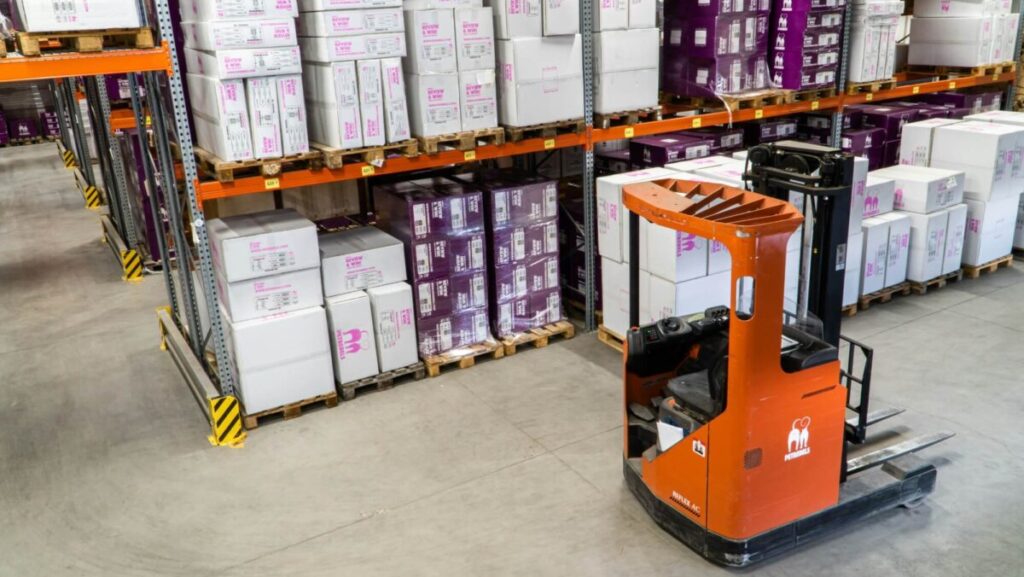
An ERP system for warehouse management supports the effective management of inventory, goods receipt, warehouse space optimization, and goods dispatch. It enables the Tracking goods movements, managing warehouse locations, and optimizing supply chain processes. Real-time inventory information allows companies to avoid bottlenecks and optimize delivery times.
An ERP system for document management serves the central administration and organization of documents and records within a company. It enables the capture, storage, retrieval, and approval of documents in digital form. Through integration with other modules, relevant documents can be easily assigned and viewed in the context of specific business processes.
These applications and modules of an ERP software work together to integrate and optimize the various business functions of a company. Through centralized access to up-to-date information and the automation of processes, ERP software helps companies increase their efficiency, improve collaboration, and make informed decisions based on real-time data.
ERP interfaces are connections or interfaces that enable an ERP system to be integrated with other software applications, systems, or external partners and to exchange data. These interfaces serve to seamlessly transfer information between the ERP solution and other software solutions or systems to ensure smooth communication and efficient data exchange.
ERP interfaces can be implemented at different levels and for different purposes. Here are some examples of commonly used ERP interfaces:
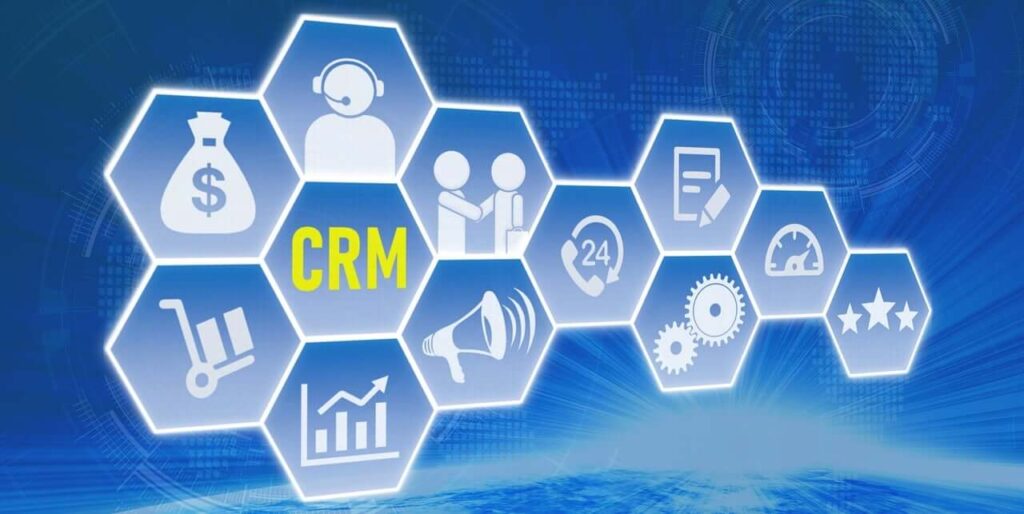
An interface between the ERP software and a Customer Relationship Management (CRM) system enables the exchange of customer data, orders, sales activities, and other relevant information. This gives both the ERP and CRM systems a comprehensive overview of customer relationships and facilitates effective customer support.
An interface between the ERP system and a marketing automation solution enables the exchange of customer data, transaction histories, marketing campaigns, and other relevant information. This allows for personalized customer communication, automated marketing activities, and improved campaign effectiveness. By integrating marketing automation with the ERP system, companies can better manage the entire customer lifecycle and coordinate marketing and sales activities more efficiently.
An interface between the ERP solution and a human resources management software This enables the exchange of employee data, salary information, working hours, absence management, and other relevant information. This integration allows for seamless HR management, automated payroll processing, and efficient personnel administration. Integrating these systems prevents data duplication and ensures the accuracy of employee data.
An interface between the ERP system and a production planning and control system enables the exchange of order data, production plans, material requirements information, inventory levels, and other relevant information. This integration allows companies to efficiently plan, control, and monitor their production processes.
An interface between the ERP system and a ticketing system for complaints and service enables the seamless exchange of customer data, service requests, complaints, ticket history, and other relevant information. Such complaint management software simplifies the administration and processing of customer service requests and complaints.
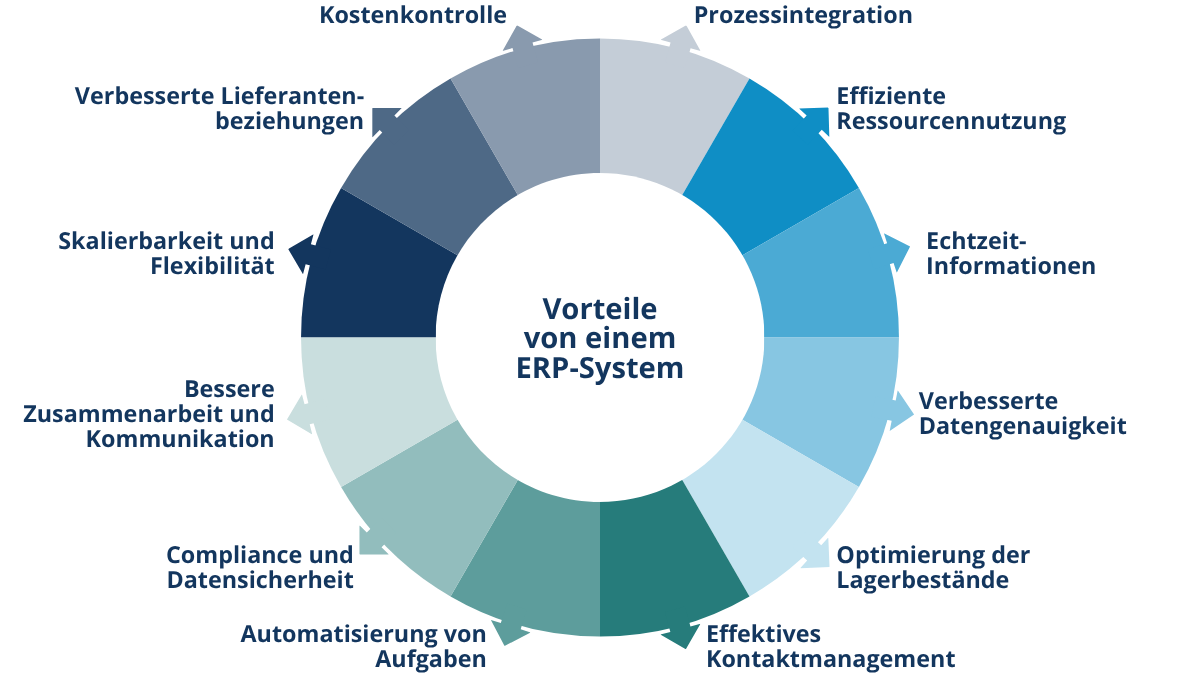
Finally, ERP systems offer a multitude of advantages for businesses. Here is a comprehensive list of the benefits of ERP systems:
ERP systems enable the integration and automation of various business processes within a company. The central database and the linking of departments allow for seamless information exchange, leading to improved efficiency and productivity.
An ERP system enables companies to manage their resources, such as materials, employees, and machinery, more efficiently. Improved planning and monitoring of resources can reduce bottlenecks and optimize capacity utilization.
They offer real-time data and reports that enable companies to make informed decisions. Access to up-to-date information allows companies to react quickly to market changes, identify bottlenecks, and seize opportunities.
Through centralized databases and process automation, ERP systems minimize human error and reduce duplicate data entry. This leads to greater data accuracy and more reliable information for decision-making.
An ERP system enables companies to optimize their inventory levels. Improved planning and monitoring of material requirements reduce overstocking and shortages, leading to lower warehousing costs and improved cash flow.
ERP systems often integrate customer relationship management (CRM) functions, enabling companies to centrally manage customer information and gain a 360-degree view of their customers. This allows companies to better serve their customers, conduct personalized marketing campaigns, and build long-term customer relationships.
They automate manual and recurring tasks, such as invoicing, order processing, accounting, and reporting. This saves time, reduces workload, and minimizes errors.
An ERP system helps companies comply with regulations and ensure data protection. Features such as access control, encryption, and audit trails enable companies to guarantee the security and confidentiality of their data.
An ERP system enables different departments and employees within a company to collaborate effectively and share information. This improves communication, increases efficiency, and facilitates decision-making.
ERP systems are often scalable and can be adapted to the growing needs of a company. Additional modules and functions can be added to meet changing business requirements.
By automating processes, reducing errors, and using resources efficiently, ERP systems can lead to cost savings. Companies can better control their costs and improve their profitability.
By integrating supplier information and using e-procurement modules, companies can improve collaboration with suppliers, process orders more efficiently, and optimize procurement processes.
ERP systems must meet certain requirements of the General Data Protection Regulation (GDPR) to ensure the protection of personal data. Here are some of the most important GDPR requirements that ERP systems should fulfill:
The processing of personal data in an ERP system must be based on a legal foundation. It is important to provide transparent information about the purposes of the data processing, the categories of data processed, the rights of data subjects, and other relevant information.
ERP solutions must process personal data only for specified, explicit, and legitimate purposes. The data should not be further processed in a manner incompatible with these purposes.
You should only process the personal data that is necessary for the respective processing purpose. No superfluous or unnecessary data should be stored.
It is important to ensure that the personal data stored in an ERP system is accurate and up-to-date. Appropriate measures should be taken to ensure that inaccurate or outdated data is corrected or deleted.
Personal data should not be stored longer than necessary. Retention periods must be defined and adhered to in order to ensure that data is not kept longer than required.
ERP systems must implement appropriate technical and organizational measures to protect personal data from unauthorized access, loss, destruction, or disclosure. This includes encrypting sensitive data, implementing access controls, and regularly reviewing security measures.
In the event of a data breach resulting in a violation of the protection of personal data, operators of an ERP system must inform the relevant supervisory authority and, where applicable, the data subjects. It is important to have effective procedures for reporting data breaches and to implement these within the legally prescribed time limits.
ERP systems should provide mechanisms to enable data subjects to exercise their rights under the GDPR. These include the rights of access, rectification, erasure, and restriction of processing of personal data.
The specific requirements of the GDPR can vary depending on company size, the type of data processed, and other factors. Companies should conduct a comprehensive data protection analysis and, if necessary, seek legal advice to ensure that their ERP system complies with the specific requirements of the GDPR.
In summary, ERP systems offer a multitude of benefits for businesses of all sizes and industries. From integrating and automating business processes to improving efficiency and productivity, and optimizing resources and inventory, ERP systems provide a solid foundation for a company’s growth and success. The real-time information and data-driven decisions that an ERP system enables help companies remain competitive and adapt to ever-changing market conditions.
Furthermore, ERP solutions promote collaboration and communication between departments and contribute to improved customer service and loyalty. By ensuring compliance with regulations and protecting data, ERP solutions also contribute to the security and confidentiality of information. The scalability and flexibility of ERP systems enable companies to adapt to their growing demands and tailor the system to their specific needs.
Overall, ERP systems provide a solid foundation for efficient and effective business management, ultimately leading to cost savings and improved business results. Companies that leverage the benefits of ERP systems have the opportunity to optimize their processes, strengthen their competitive position, and create a solid basis for future growth.